Total Contact Cast: How It Heals a Diabetic Foot Ulcer
A total contact cast heals a diabetic foot ulcer by keeping weight off it with every step. Who it suits, how long you wear one, risks, and cast vs boot.
Diabetic foot ulcers, infection and wound healing: grading, offloading, when circulation is the limiting factor, and what a wound open at six weeks is telling you.
A total contact cast heals a diabetic foot ulcer by keeping weight off it with every step. Who it suits, how long you wear one, risks, and cast vs boot.
Toe amputation with diabetes: why it’s done, how long healing takes, walking afterward, the real survival figures and what lowers the risk of another.
Most leg ulcers in diabetes are venous or arterial, not neuropathic. Early signs, how to tell them apart, and why circulation comes before compression.

How to heal a diabetic wound faster: offloading, blood flow, infection and glucose control, the myths that slow healing, and when to see a specialist.
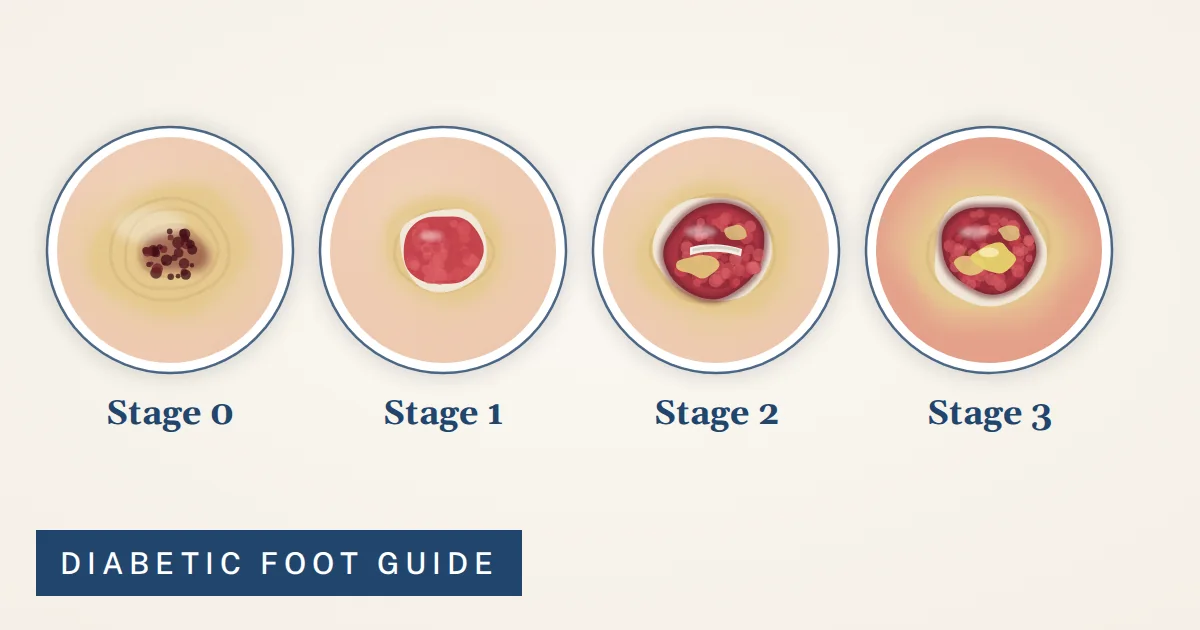
What an early-stage diabetic foot ulcer looks like, the Wagner stages 0 to 5 in pictures, and what to do today at each one, from a foot and ankle surgeon.
Dry, wet and gas gangrene look different and move at different speeds. How they are told apart, why it often does not hurt, and which one is measured in hours.
Neuropathic, venous, arterial and pressure ulcers look different and need opposite treatments. How to tell them apart, and why compression can harm the wrong one.
Infection is diagnosed by looking at the foot, not by swabbing it. The signs, why fever is often absent, and the probe-to-bone test that changes the whole plan.
Diabetic foot ulcers heal when the pressure comes off and the blood supply is adequate. A surgeon on grading, offloading and what six weeks without progress means.